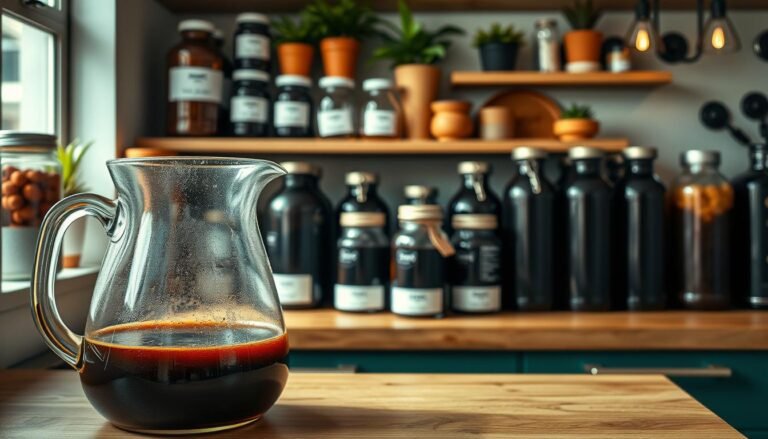
Cold Brew vs Iced Coffee
We set the stage by defining how each drink was made and why we noticed different results at home.
One method used long steeping at cool temperatures to pull out oils and a smooth concentrate. The other brewed hot then chilled fast, locking in brighter notes.
Our guide previews the main takeaways: the first tends toward velvety mouthfeel and low perceived acidity, while the second is cleaner and more complex, letting origin shine.
We explain grind size, ratios, and timing so you can choose the way that fits your routine and gear. We also cover storage and sanitation to keep flavors fresh and avoid stale oils.
By the end, we promise clear steps and practical tips for people who want a reliable morning concentrate or a quick, flash-chilled cup.
What sets cold brew apart from iced coffee right now
How long we let water touch the grounds and at what temperature explains most flavor differences. We’ll outline the core contrasts so you can pick the right method for your routine.
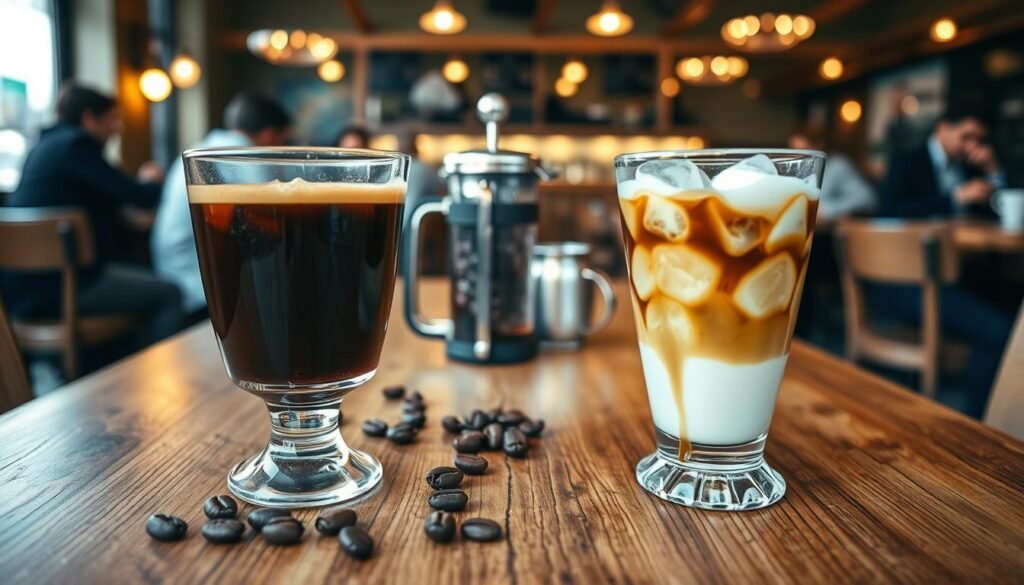
Quick takeaway: cold infusion over hours vs hot brew over ice in minutes
Slow infusion uses cool or room-temperature water and very coarse grounds for at least 12 hours. The long contact time yields a smoother body with lower perceived acidity.
By contrast, a flash method pours hot water over reduced brew volume and ice, finishing in under ten minutes. Rapid cooling limits oxidation and preserves bright, balanced flavors.
At a glance: water temperature, grind size, time, and taste profiles
- Extraction: cold water pulls taste slowly; brewed hot extracts quickly.
- Grind: very coarse for long steeps; medium grind for hot extraction.
- Workflow: steep 12–24 hours then strain and dilute; flash-brew over ice cubes with reduced brew water so melted cubes balance strength.
- Taste: long steeping produces smooth, low acidity; flash preserves lively acidity and complex flavors.
Brewing methods compared: how we brew iced coffee and cold brew at home
To compare methods we documented grind, ratios, and timing for each batch. Below we lay out step-by-step recipes and gear so you can reproduce our results at home.
Cold brew method
We measure ~250 g coarse, sea-salt textured ground coffee and add 1 liter filtered water. After a short bloom we top with 250 ml more water.
Steep at room temperature or in the refrigerator for 12–24 hours. Lift or strain to yield a concentrate and dilute one part concentrate to two parts cold water to serve.
Flash hot-over-ice method
Start with your usual hot ratio, then halve brew water to about 1:8. Place ice in the server so melted cubes finish the final volume.
Pour hot water over a medium grind directly onto the ice, chill immediately, and bottle right away to preserve aromatics. Total time is under ten minutes.
Ratios, grind, time, and gear
Typical ratios: a robust 1:5 concentrate for the long steep, and ~1:8 for the hot-over-ice pour. Use coarse for long steeps and medium for fast extraction.
Common gear: pour-over dripper or drip maker for flash brewing, a French press or dedicated cold brewer for long steeps, plus good filters and clean jars.
| Step | Long-steep concentrate | Hot-over-ice pour |
|---|---|---|
| Grind | Coarse (sea-salt) | Medium |
| Ratio (coffee:water) | ~1:5 concentrate | ~1:8 pre-ice |
| Time | 12–24 hours | <10 minutes |
| Finish | Strain, dilute 1:2 | Melted ice completes yield, chill |
| Storage | Up to 10 days sealed | Drink same day for best aroma |
Taste, flavor, and acidity: how temperature changes your cup
Temperature and contact time reshape the cup, shifting sweetness, bitterness, and body in predictable ways.

Flavor and mouthfeel
When we use cold water over long contact, the result is bold and velvety. The concentrate reads smoother with lower perceived acidity and fewer bitter notes.
By contrast, a hot, flash pour produces a bright, clean cup. Aromatic complexity and lively acidity come forward. That sparkling character often defines coffee taste for many drinkers.
Beans and roast choices
For the rounded, chocolate-forward profile we prefer medium-to-dark roast blends and beans that deliver body and sweet caramel notes.
When we want floral and fruity flavors in an iced coffee, origins like East Africa or lighter roasts shine under quick brewing and fast chilling.
Balance moves
- Dilute concentrate with water to taste; start 1:2 and adjust.
- Brew strong over ice so melted cubes don’t wash out flavor.
- Use larger, slow-melting ice or coffee ice cubes to reduce dilution.
- Chill quickly after brewing to limit oxidation and protect delicate flavors.
| Attribute | Long steep | Flash hot-over-ice |
|---|---|---|
| Mouthfeel | Full, syrupy | Light, crisp |
| Dominant flavors | Chocolate, caramel | Citrus, floral |
| Acidity | Lower perceived acidity | Balanced, lively acidity |
| Best beans/roast | Medium–dark blends | Single-origin, fruit-forward |
Cold Brew vs Iced Coffee: caffeine, extraction, and strength
Our tests focused on how dose, contact time, and serving method shift the caffeine in your cup.
Does long contact time raise caffeine?
Yes. A higher coffee-to-water ratio and many hours of contact often make cold brew stronger per ounce before dilution. That extended time pulls more soluble caffeine and oils from the grounds.
Key variables that move the needle
- Water temperature — heat speeds extraction; hot water pulls compounds quickly.
- Surface area — finer grind increases extraction from coffee grounds.
- Ratio and time — more dose or more hours raise strength; dilute concentrate to taste.

| Factor | Effect on caffeine | Practical tip |
|---|---|---|
| Dose/Ratio | Major driver | Start 1:5 concentrate or ~1:8 flash |
| Temperature & time | Heat = fast, cold = slow | Use hot for quick cups; steep long for house concentrate |
| Serving | Perceived strength varies | Chill fast and dilute to control intake |
Both methods extract caffeine effectively. Adjust dose, dilution, or serving size so your preferred style fits the day.
From kitchen to cup: practical tips for better cold coffee
A few practical habits in the kitchen turn a weekly batch into consistent, great-tasting cold coffee all week long.
Make-ahead concentrate and storage
We batch a cold brew concentrate on the weekend so mornings are just pour, dilute, and go. Store the sealed jar in the fridge and use within ten days for best flavor.
Fill containers as full as possible, label the date, and keep them cold. If the taste fades after a few days, clean your gear to remove trapped oils that flatten new batches.
Practical tips for routine and texture
- Wash brewers, filters, carafes, and bottles thoroughly to strip old oils and maintain bright flavor.
- You can steep at room temperature or in the refrigerator; cooler conditions extract a bit slower and help food safety.
- Pre-mix a ready-to-drink bottle from your brew concentrate or keep a measuring cup by the fridge for consistent dilution.
- Freeze leftover drink into ice cubes to avoid dilution, or use larger clear ice to slow melting when sipping slowly.
Nitro reality and flash-brew quick wins
Nitro on tap is great at cafés, but the draft and nitrogen gear make at-home setups impractical for most homes. Instead, we focus on methods that build creamy texture without tanks.
For flash brewing, pour directly over ice, cap and chill immediately, and drink within a day to preserve aromatics and slow oxidation.
Choosing your perfect summer coffee drink
We map taste and routine to the right method so you can pick confidently. If you want bright aromatics and fast service, use a flash pour over ice. If you want a smooth, chocolaty concentrate to dilute all week, make a long steep batch.
Match beans and roast to your goal: fruit-forward origins for flash pours, body-driven blends for a plush concentrate. Decide by time, desired caffeine, and whether you’ll batch for the week.
Tweak dose, grind, water yield, and dilution to tune flavor. Pre-bottle a ready-to-drink jar for workouts, or brew straight into a travel cup when you have five minutes. Try both methods across seasons so you find the cup that fits the moment.