Is Cold Brew Stronger Than Coffee
We clear up the common question about strength, using clear measures: caffeine, concentration, and taste. Our goal is to help you pick the right cup for the moment.
Cold brew typically yields a concentrate after steeping coarse grounds for 8–24 hours. A 12-ounce serving of that concentrate often has about 170–245 mg of caffeine, while a small hot cup (6 ounces) averages 70–80 mg. Espresso sits near 64 mg per ounce.
We explain how a higher coffee-to-water ratio and long steep time create a potent extract, yet dilution and serving size decide the final caffeine per cup. The result can taste smoother and less acidic, which may feel milder despite higher caffeine content.
In the sections ahead, we compare ranges, show the math for dilution, and outline method differences so you understand how brew technique, bean choice, and serving size shape flavor and kick.
What We Mean by “Stronger”: Caffeine, Flavor, and Concentration
Strength can mean different things. We separate three measures so readers can compare drinks fairly: the caffeine dose in a serving, how bold the flavor seems, and the concentration set by the coffee-to-water ratio.
Strength as caffeine content vs. perceived intensity
Caffeine is a clear, numeric measure of strength. A 12 oz cold brew concentrate often lands between 170–245 mg, while a 6 oz hot brewed coffee typically sits near 70–80 mg.
Perceived intensity depends on taste and acidity. A smooth, low-acid cup can feel milder even when its caffeine content is equal or higher.
Why concentrate and serving size change the answer
Many people make concentrate at ratios from 1:4 to 1:8, then dilute to taste. That ratio choice and how much water, ice, or milk you add decide the final caffeine per cup.
- A strong concentrate does not guarantee a stronger drink after dilution.
- Comparing a 12 oz concentrate to a 6 oz hot cup is misleading unless you adjust for volume.
- Iced coffee is brewed hot then chilled; it differs from cold extraction and often has different caffeine and flavor profiles.
In short, brewed beverages can match in caffeine when served at similar strengths. To get a bigger caffeine hit, reduce dilution or pour a smaller, more concentrated cup. We’ll show the math next so you can judge numbers on labels and menus.
Is Cold Brew Stronger Than Coffee: The Caffeine Comparison
Let’s look at real numbers so we can compare typical servings head-to-head.
Typical ranges by serving size
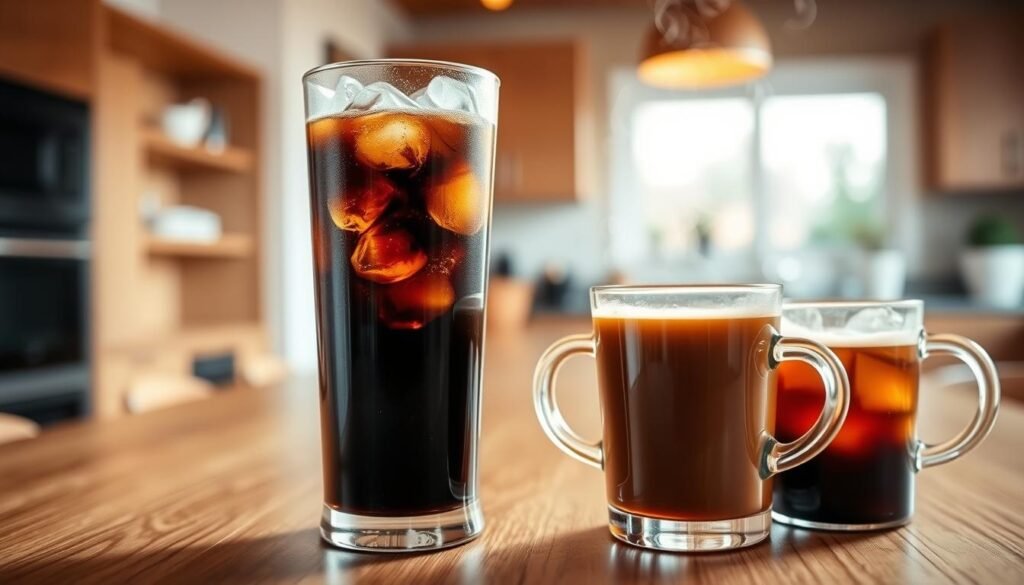
A 12 oz cold brew commonly runs about 170–245 mg of caffeine. A 6 oz hot brewed coffee usually sits near 70–80 mg. A 16 oz iced coffee often averages ~165 mg, while a similar 16 oz cold brew often exceeds 200 mg.
How dilution and ice shift caffeine per cup
Making a concentrate and cutting it with water or milk lowers caffeine per serving. Drinking concentrate straight spikes the caffeine fast.
Ice displaces liquid and later melts, which can slightly reduce caffeine per fluid ounce as the drink dilutes.
Cafe drinks and ready-to-drink cans
Cafes and cans vary recipes and ratios. A labeled serving size can hide the total caffeine if you consume a full can or ask for less dilution.
- Two 6 oz hot cups can equal or exceed a single concentrated serving.
- Ask a barista for ratio and serving size to hit a target caffeine amount.
| Drink | Common Size | Typical Caffeine (mg) | Notes |
|---|---|---|---|
| Cold brew concentrate | 12 oz | 170–245 | Often diluted; straight pours are much stronger |
| Hot brewed coffee | 6 oz | 70–80 | Short cup; brewing method affects extraction |
| Iced coffee (cafe) | 16 oz | ~165 | Brewed hot then chilled; can taste brighter |
| 16 oz cold brew (cafe) | 16 oz | >200 | Smoother taste with equal or higher caffeine |
Brewing Method Deep-Dive: Time, Temperature, and Extraction
The brewing method controls which compounds the water pulls from grounds and how fast it happens. We look at two contrasting approaches and what they deliver in caffeine, acids, and body.
Cold extraction with long steep periods
Cold brew coffee is made by steeping coarse ground coffee in cold water for 8–24 hours. The long contact time and higher coffee-to-water ratio yield a strong concentrate before any dilution.
Low temperatures slow extraction of volatile acids and oils, producing a smoother, lower-acid profile. Coarse grounds help with clean filtration during this extended period.
Hot, fast methods
Hot brewed coffee uses heated water and fast extraction in minutes via drip, pour-over, or French press. Heat pulls compounds quickly and efficiently, so brew time is short.
Why time and ratio matter
- Longer steep time and higher ratios increase caffeine concentration in the concentrate.
- Heat extracts more per minute, but total yield depends on contact period and grind size.
- Concentrates store well in the fridge up to two weeks, best within a week for peak flavor.
Ratios and Concentrates: The Math Behind “Brew Stronger”
We walk through the math behind ratios so you can control how much punch each cup delivers.
Common recipe ranges
Most cold brew concentrate is made at 1:4 to 1:8 coffee-to-water ratios. Ready-to-drink recipes often sit near 1:11 to 1:12. By contrast, drip brew coffee commonly uses 1:16–1:20.
How ratio and dilution change caffeine per serving
A stronger concentrate holds more caffeine per ounce. If you dilute a 1:4 concentrate 1:1 with water, caffeine per cup halves. Diluting a 1:8 concentrate the same way yields less caffeine than a straight small hot cup.
- Map: 1:4–1:8 = concentrate; 1:8–1:12 = ready-to-drink.
- Example: one batch of concentrate can make multiple cups with varying caffeine by changing dilution.
- Steep hours and extraction raise soluble content up to a point; very long periods add body but may hit diminishing returns.
| Recipe | Ratio | Use |
|---|---|---|
| Potent concentrate | 1:4–1:6 | Cut 1:1 or sip straight |
| Standard concentrate | 1:7–1:8 | Mix 1:2 for ready cup |
| Ready-to-drink | 1:11–1:12 | Pour over ice as-is |
We recommend batching, refrigerating up to two weeks, and diluting to order. That way you control flavor, body, and caffeine for each cup.
Beans, Roast, and Grind: Variables That Change Caffeine Content
Bean choice and roast level shape how much kick and what flavor notes a cup delivers.
Arabica and Robusta differ sharply. Arabica beans give a smoother taste and generally lower caffeine. Robusta is bolder and can contain nearly twice the caffeine per bean. Choosing a blend affects both taste and the total caffeine in each serving of coffee.
Roast level changes perception more than dose. Light roast beans retain slightly more caffeine by volume because they lose less mass when roasted. Dark roasts taste stronger and fuller, but do not always add caffeine per cup.
Grind size and extraction link directly. Finer ground particles expose more surface area and extract faster. Coarse grounds suit long, cold extraction to avoid harsh flavors. Adjust grind and contact time based on your brew method to hit the desired caffeine and flavor balance.
- For higher caffeine: use a Robusta blend or a lighter roast by volume, and raise the coffee-to-water ratio.
- For smoother flavor: choose darker roast for deeper notes, and coarse ground for long steeps.
- Change one variable at a time—grind, ratio, or roast—so results are predictable.
| Factor | Effect on Caffeine | Effect on Flavor |
|---|---|---|
| Bean (Arabica vs Robusta) | Robusta ↑ (up to ~2×) | Arabica = smoother; Robusta = earthy/bold |
| Roast (light vs dark) | Light roast slightly ↑ by volume | Light = brighter notes; Dark = deeper, roasty notes |
| Grind size | Finer ↑ extraction rate | Fine = more intensity; Coarse = cleaner, less bitter |
Taste, Acidity, and Mouthfeel: How Each Brew Drinks
How a cup drinks often matters more than its caffeine math. We focus on sensory differences so you can pick a drink that fits your mood and tolerance.
Cold extraction and softer character
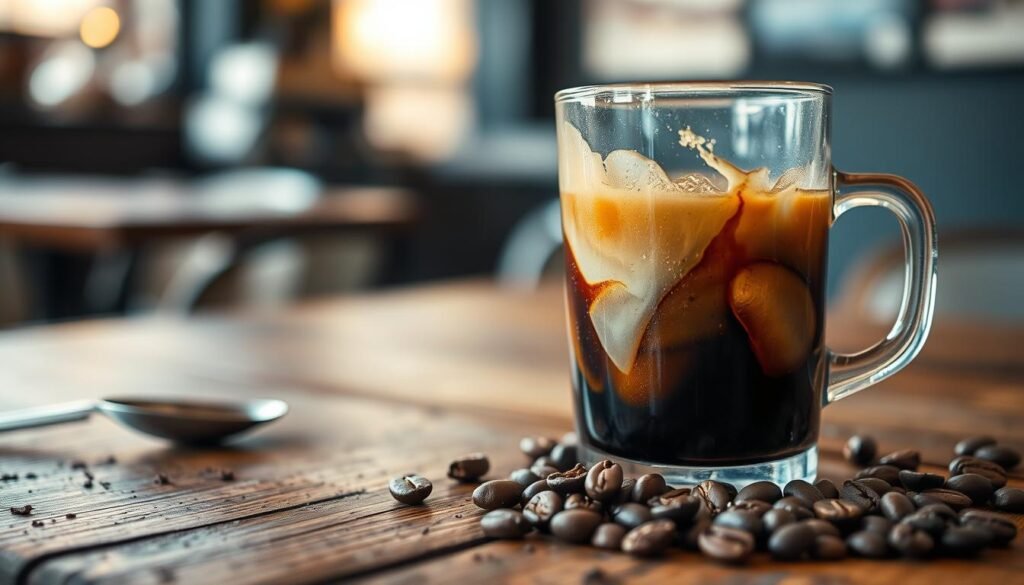
Slow, low-temperature extraction leaves many volatile acids and oils less extracted. The result is a smooth, less acidic profile with chocolate and nutty notes.
This style often gives a thicker, creamier mouthfeel that coats the palate and highlights rounded flavor.
Hot brew and bright aromatics
Hot methods preserve brighter acidity and classic aromatics. Even when served iced coffee, the heat-extracted compounds create clearer, livelier flavors.
Why some find it gentler on the stomach
People with sensitive stomachs report cold brew feels gentler. The process reduces certain sharp acids and lowers perceived bite, though pH can be similar.
- Choose cold brew for mellow, chocolatey notes and creamy body.
- Choose hot or iced coffee for brightness, clarity, and aromatic lift.
- Taste side by side to match flavor, acidity, and mouthfeel to your day.
Serving Smarter: Dilution, Milk, and Portion Control
We start with a simple rule: adding water or milk lowers the caffeine per cup in direct proportion to dilution. Mix by the cup to match your target for the day instead of pre-diluting a whole batch.
Cutting concentrate to hit a caffeine target
A 1:1 pour (equal parts concentrate and water or milk) yields a bold glass. A 1:2 pour softens caffeine and flavor for regular drinking.
Milk adds sweetness and body and slightly changes perceived strength. Use milk when you want a gentler, creamier cup without adding sugar.
How common serving sizes compare
A 12 oz concentrate can outpace a 6 oz hot cup in caffeine if poured straight. A 16 oz iced coffee typically lands near 165 mg, while a 16 oz cold brew often exceeds 200 mg when less diluted.
Storage, freshness, and taste over time
Keep concentrate sealed and refrigerated. Peak flavor is usually within 5–7 days; usable up to about 14 days if chilled and unopened often.
Avoid frequent opening to preserve aroma and content. Shake before pouring and taste-test dilutions to keep consistency.
- Pour guides: 1:1 for bold, 1:2 for daily, dilute more for late-day cups.
- Ice chills and dilutes—brew stronger for drinks served over ice to maintain taste.
- Note your coffee grounds-to-water ratio when you brew so you can repeat results.
| Action | Typical Mix | Effect on Caffeine |
|---|---|---|
| Bold glass | 1:1 concentrate : water/milk | ≈50% of concentrate caffeine per cup |
| Daily drink | 1:2 concentrate : water/milk | ≈33% of concentrate caffeine per cup |
| Serve over ice | Stronger batch, 1:1–1:1.5 | Compensates for melt dilution; maintains flavor |
Making the Right Pick for Your Day
We help you pick the right cup by matching taste, caffeine goals, and daily routine.
.
Choose cold brew when you want a smoother, less acidic glass that often carries more caffeine per same-size serving. Pick hot or iced coffee for bright aromatics and a familiar flavor profile with moderate caffeine.
Use ratio and portion as levers: dilute to cut caffeine, or sip concentrate for a bigger hit. Scan cans and cafe labels for content to keep intake under ~400 mg per day.
If your stomach is sensitive, the less acidic option may feel gentler, especially with milk. In short: choose flavor, set ratio, pick portion—then enjoy your drink with confidence.