Does Cold Brew Coffee Have More Caffeine
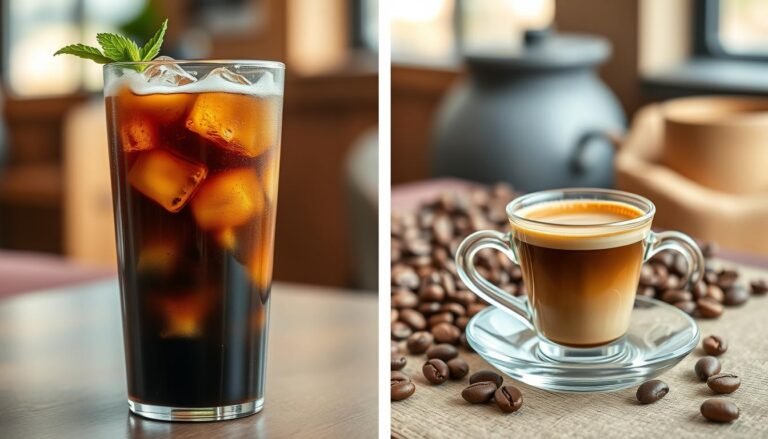
We set out to answer this common question using real servings and brand data. Cold brew is made steeping ground coffee in cold or room-temperature water for 8–24 hours, which yields a smoother, less acidic taste and a strong flavor profile.
Average caffeine per 16 oz cold brew sits near 200 mg. For context, Starbucks lists about 205 mg for a 16 oz serving and Dunkin’ clocks around 260 mg. Hot coffee in a similar cup can range from about 210 to 360 mg.
We will compare like-for-like serving sizes and note how dilution, concentrate versus ready-to-drink, bean type, grind, ratio, and brew time change total caffeine. That method view helps explain why a smooth-tasting drink can still deliver significant stimulation.
Short answer preview: many retail cold brews land near 200 mg per 16 oz—sometimes lower than a strong hot brew, sometimes higher than iced options—so serving and preparation determine the final amount.
What we mean by “more caffeine” right now
Our focus is the caffeine you actually consume in a typical café or store serving. That means we compare final drinks by the cup size people buy, not the undiluted concentrate in a carafe.
We aim to match like-for-like sizes. A 16‑ounce ready-to-drink item averages around 200 mg for many retail items. For example, Starbucks lists 205 mg for its 16‑oz option and Dunkin’ about 260 mg. Hot coffee at 16 oz ranges from roughly 210 to 360 mg in major chains, so overlap is common.
- Intent: most readers mean the cup they order, not concentrate.
- Concentration vs serving: a strong concentrate can drop once diluted with water or ice.
- Ratio matters: a higher coffee-to-water ratio raises the final amount per cup.
- Add-ins like milk or syrup reduce concentration per ounce but add no stimulant.
| Brand / Type | Serving (oz) | Caffeine (mg) | Notes |
|---|---|---|---|
| Starbucks — ready-to-drink | 16 | 205 | Typical retail cold option |
| Dunkin’ — ready-to-drink | 16 | 260 | Higher chain average |
| Generic hot drip | 16 | 210–360 | Wide range due to brew strength |
Cold brew basics: how brew method shapes caffeine content
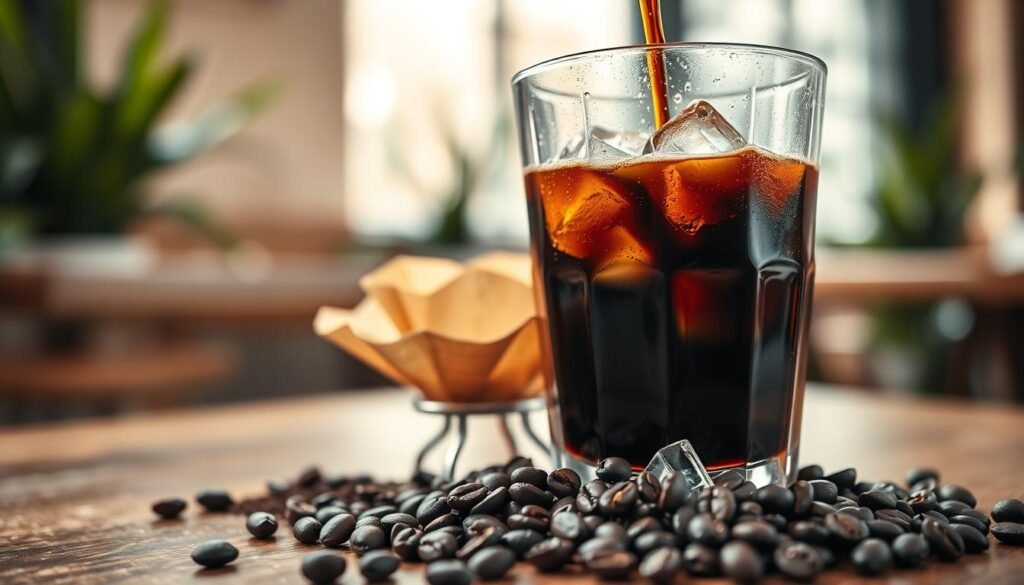
We break down how the steeping method changes what ends up in your cup. The classic technique is made steeping coarse ground coffee in cold or room-temperature water for 8–24 hours.
The slower extraction pulls out caffeine and other solubles more gradually than hot water. To hit the same strength, many recipes use a higher coffee-to-water ratio or longer hours, which raises the caffeine content in the concentrate.
Cold water pulls fewer acidic and bitter compounds, so the drink tastes less acidic and smoother. That milder flavor can mask a strong stimulant amount if the concentrate is not heavily diluted.
- Definition: immersion of grounds in cold water for many hours to make concentrate or ready-to-drink.
- Extraction note: temperature slows extraction, so ratio and time compensate.
- Variability: grind size, beans, steep time, and dilution control final caffeine.
| Factor | Effect on caffeine | Notes |
|---|---|---|
| Steep hours | More time → more extraction | Typically 8–24 hours |
| Coffee-to-water ratio | Higher ratio → higher amount per serving | Concentrate often diluted before serving |
| Grind size & beans | Coarse grind, bean type changes yield | Roast and origin alter extraction |
Does Cold Brew Coffee Have More Caffeine
To be practical, we compared standard cup sizes and brand listings to find a clear baseline.
The short answer based on today’s data
Most ready-to-drink cold brew lands near 200 mg for a 16 oz serving. That places it close to many hot options, though very strong hot brews can exceed it.
Typical numbers per cup: 12 oz and 16 oz servings
Across sources, a 12 oz sample averages about 207 mg while a 16 oz average sits near 200 mg. Variability is high because extraction, concentrate strength, and dilution shift the final amount in the cup.
Brand examples: Starbucks vs. Dunkin’ cold brew
Starbucks lists roughly 205 mg for a 16 oz cold brew. Dunkin’ can reach about 260 mg for the same size, showing how recipe and ratio change caffeine content.
- Interpretation: serving caffeine reflects extraction efficiency, concentrate strength, and how much water or ice is added.
- Tip: check posted caffeine content when available to choose a consistent serving.
Cold brew vs. hot coffee, iced coffee, and espresso: a practical comparison
We line up common shop servings so readers can see how brewing style and cup size change the total stimulant in a single cup.
Hot coffee (16 oz)
Hot coffee brewed with hot water extracts quickly. A 16 oz serving at major chains ranges from about 210 to 360 mg of caffeine.
Iced coffee: why it’s typically lower
Iced coffee is usually brewed hot, chilled, and served over ice. That process and extra dilution often yields less caffeine per 16 oz — roughly ~165 mg at some chains.
Espresso: high per ounce, smaller serving
Espresso packs a big amount per ounce. A 1.5 oz shot can approach 150 mg, but total is smaller than a large cold brew or a big hot cup.
- Compare 16 oz servings: cold brew commonly sits near 200–205 mg, while hot coffee can exceed that when brewed strong.
- Extraction and size matter: hot water pulls compounds faster; larger cups raise total amount.
- Perception: a smooth cold brew can mask a high stimulant level until you feel the effect.
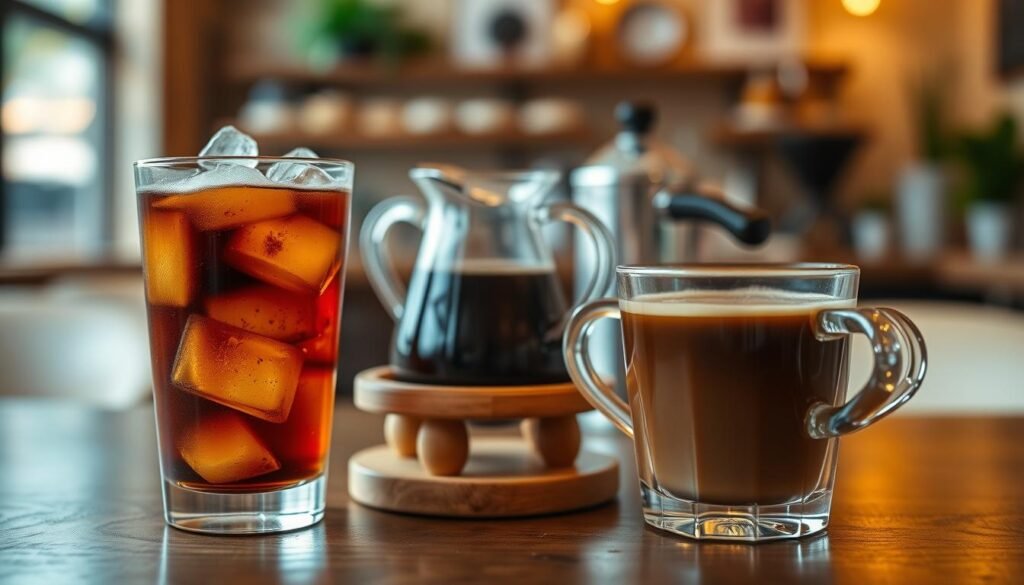
| Drink | Serving (oz) | Avg mg |
|---|---|---|
| Cold brew | 16 | 205 |
| Iced coffee | 16 | ~165 |
| Hot coffee | 16 | 210–360 |
| Espresso (shot) | 1.5 | ~150 |
Why extraction changes caffeine: temperature, time, and ratio
We test how temperature, time, and dose change what actually ends up in your cup. Temperature speeds solubility, so hot water pulls dissolved solids far faster than cold water.
Hot water vs. cold water and hours
Hot water increases diffusion and extracts caffeine quickly. A large share of stimulant and flavor comes out in the first few minutes with hot brewing.
Cold water needs many hours of immersion to approach that extraction. Studies show much of the stimulant dissolves by about seven hours, with modest gains after longer steeps.
Ratio, grounds, and bean factors
Higher coffee-to-water ratio in a concentrate raises caffeine per volume. Finer ground increases surface area and speeds extraction; coarser slows it.
Bean type and roast matter too: Robusta and darker roast can shift yield. We track beans and roast to tune strength and flavor.
Concentrate vs. ready-to-drink
Concentrate often uses a ~1:5 coffee-to-water mix and is diluted later, commonly about 2:1 water to concentrate. Dilution lowers caffeine per serving even if the concentrate is strong.
| Factor | Effect on content | Notes |
|---|---|---|
| Temperature | Faster extraction | Hot water extracts quickly |
| Ratio | Higher → stronger | Concentrate raises per-ounce yield |
| Grind | Finer → more | Surface area drives extraction |
| Time | Longer → more | Most extracted by ~7 hours |
From concentrate to cup: serving size, water ratio, and add-ins
Here we translate concentrate numbers into the final pour so you can see how recipes affect intake.
Many cafés brew a strong concentrate—often near a 1:5 coffee-to-water base—and then mix it for service. A common house mix is a 2:1 water to concentrate ratio. That cut instantly lowers the caffeine per ounce in the cup.
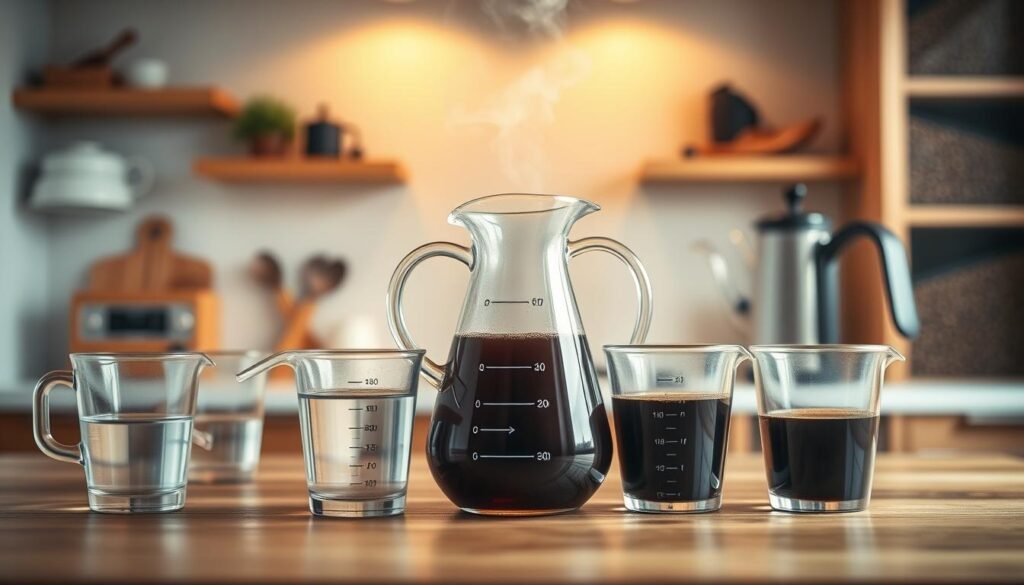
How a 2:1 dilution affects caffeine per serving
If concentrate contains X mg per ounce, a 2:1 dilution gives roughly one-third of that X per ounce in the final drink. So a potent base can still yield a milder serving once water is added.
Ice, milk, and syrups: real-world changes to caffeine content
Ice displaces liquid and often reduces the actual coffee volume you drink. Milk and syrups add bulk without adding stimulant, lowering concentration per ounce.
- Size matters: larger cups can deliver more total caffeine even when diluted.
- Higher caffeine options: ask for light ice or less water to raise strength.
- At home: measure concentrate and water with a scale for consistent results.
| Stage | Example ratio | Effect on content |
|---|---|---|
| Concentrate | 1:5 (grounds:water) | High per-ounce amount before dilution |
| Service mix | 2:1 (water:concentrate) | Final concentration reduced ≈ 33% |
| With add-ins | Light ice / milk | Volume up, concentration per oz down; total depends on coffee volume |
How we can dial caffeine up or down in cold brew
Small adjustments in recipe and handling let us control how strong the final pour will be. We focus on a few reliable levers so you can tune strength without wrecking flavor.
Adjusting brew time, coffee-to-water ratio, and grind size
To raise strength, increase the coffee-to-water ratio, steep longer, or use a slightly finer grind. Much of extraction happens by about seven hours, so extending beyond that gives smaller gains.
To soften the cup, shorten steep time, reduce the dose, or make grounds coarser. These moves lower extraction and deliver a gentler drink for late-day sipping.
Choosing beans and roast to fine-tune results
Bean choice matters: Robusta yields more stimulant than Arabica. Light roast beans are denser and may hold a touch more per weight than darker roasts.
Match roast and origin to the flavor notes you want. That keeps the cup balanced while you tune strength.
When precision matters: agitation and commercial equipment
Agitated or forced-extraction systems can increase yield and repeatability. Studies show some commercial methods extract up to 18% more than hot coffee and ~12% more than passive immersion.
- Home consistency: weigh beans, track ratio and time, and keep grind steady.
- Test one factor at a time and note results to find your preferred way.
| Lever | Effect | Notes |
|---|---|---|
| Ratio | Higher → stronger | Most direct control |
| Time | Longer → more extraction | Big gains by ~7 hours |
| Grind | Finer → more extracted | Watch for over-extraction |
What this means for your next cup
A few simple decisions let us control stimulation and flavor in every pour.
In everyday U.S. servings, ready-to-drink cold brew often sits near ~200 mg per 16 oz. That usually gives higher caffeine than iced coffee and can match or fall below strong hot coffee depending on size and recipe.
To raise strength, pick a larger cup, use less dilution and light ice, or tighten the water ratio and grounds. To cut back, downsize, dilute more, or shorten steep time. At home, measure concentrate, keep grind and beans steady, and change one variable at a time.
Watch total daily intake (about 400 mg is a common limit) and time larger pours earlier to protect sleep. With these methods we can brew the taste and content we want, reliably.