How Long Does Cold Brew Coffee Last
We set clear expectations for shelf life in the fridge and define what peak flavor means for our batches. Properly refrigerated cold brew can stay microbiologically safe for weeks, but taste usually peaks within the first few days and begins to soften after about a week.
Our guidance balances quality and safety. Because steeping never hits pasteurizing temperatures, consistent refrigerator storage at or below 40°F (4°C) and airtight glass or stainless containers are key to preserving aroma and flavor.
Expect a crisp profile in days one to three, steady character through days four to seven, and gradual decline after day ten. Concentrate in sealed containers holds quality longer than ready-to-drink batches, while unopened commercially processed bottles often last much longer.
We’ll cover best practices, spoilage signs, and labeling tips so you can make batches that match how fast we drink them at home.
Cold brew shelf life at a glance: timelines and safety in the refrigerator
Here’s a concise timeline to help us keep batches tasting their best while staying safe in the fridge. Proper temperature control and airtight storage are the main levers that preserve both quality and safety.
Peak flavor windows: days three to seven vs. up to two weeks refrigerated
We see the flavor curve clearly. Day one to three is at its most crisp and nuanced. Days four to seven stay balanced and smooth for most palates.
By days seven to ten the brew is still acceptable. From ten to fourteen days, staleness becomes noticeable even if it remains safe when refrigerated.
Why refrigeration at or below 40°F matters for quality and safety
Holding the jug at or under 40°F (4°C) slows oxidation and microbial growth, extending the shelf life and freshness. Leave a batch at room temperature for over two hours and risk rises quickly.
- Use airtight glass containers to limit air and odor exposure.
- Label with the brew date and consider smaller containers to cut headspace.
- Remember: concentrate often keeps longer than ready-to-drink because dilution speeds spoilage.
| Time in refrigerator | Quality | Action |
|---|---|---|
| 1–3 days | Peak flavor | Drink or chill for serving |
| 4–7 days | Great | Keep sealed in glass |
| 8–14 days | Good to okay | Check aroma and appearance |
How Long Does Cold Brew Coffee Last
Home batches and store bottles age differently; knowing why helps us plan what to drink first.
Homemade vs. store-bought longevity
Most homemade batches taste best in days five to seven. Kept sealed and chilled, they remain acceptable through about ten to fourteen days.
Unopened commercial bottles benefit from processing and packaging and can keep for weeks or months on the shelf. Once opened, they follow our home timeline and should be finished within seven to ten days for best flavor.
Concentrate vs. ready-to-drink
Concentrate holds quality longer because it is less diluted. That reduces pathways for rapid flavor loss.
- Concentrate stored airtight in the fridge: up to two weeks, with decline after day seven to ten.
- Ready-to-drink: peak in the first week, then gradual staling.
- Steep 12–24 hours depending on grind and recipe for a cleaner extract that ages better.
Recognizing the drop after day ten
After about day ten, sweetness mutes and flat, mildly sour, or fermented notes appear. Label open dates, reduce headspace, and brew smaller batches to avoid that stage.
Storing cold brew the right way: containers, temperature, and exposure
Simple storage choices keep flavor bright and make our batches safer. We favor airtight, inert containers and steady cold so aroma and body stay stable on the shelf.
Why airtight glass containers beat plastic for freshness
We recommend airtight glass or stainless-steel containers because they resist odor absorption and limit oxygen transfer. That preserves clean flavor better than most plastics.
Plastic can hold odors and develop off-notes after repeated use. For longer freshness, store concentrate separate from diluted portions.
Minimizing oxygen, light, and heat to slow oxidation
Keep the refrigerator at or below 40°F (4°C). Fill containers near the top to reduce headspace and use dark glass when possible.
- Avoid the door; temp swings speed decline.
- Decant into smaller jars as levels drop to limit exposure.
- Label brew and open dates and discard on any mold, haze, or sharp off-aroma.
| Action | Why it matters | Result |
|---|---|---|
| Airtight glass or stainless | Limits odor and oxygen | Cleaner taste, longer shelf |
| Refrigerate ≤40°F | Slows oxidation and microbes | Extended safe storage |
| Separate concentrate | Less dilution, slower staling | More flexible serving window |
In short, airtight, cold, dark, and low-oxygen conditions are the backbone of fresher-tasting cold brew.
Brewing smarter to extend shelf life: beans, grind, water, and batch size
By dialing in beans, grind size, and water quality we can extend each batch’s best window. Small, repeatable changes make the cup taste better and help the flavor hold up longer in the fridge.
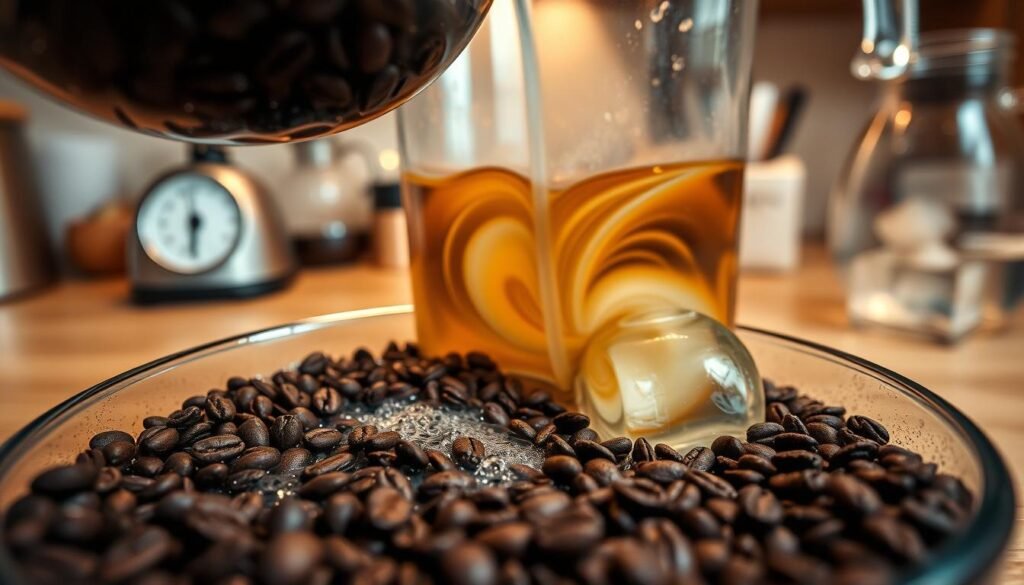
Freshly roasted beans and a coarse grind for cleaner extraction
We use freshly roasted beans because aromatics and sweetness fade fast after roasting. That initial brightness helps the drink remain lively for days.
A consistent, coarse grind reduces fines. Fewer fines mean clearer extraction and a taste that ages more gracefully.
Filtered water and clean equipment to reduce off-flavors
Filtered water cuts chlorine and mineral off-notes that can show up after a few days. Clean jugs and filters prevent unwanted microbes and smells.
Wash gear with hot, soapy water and dry completely before use to avoid early spoilage.
Brew smaller batches and label dates to manage time in the fridge
Common steep ranges work well: 12–18 hours for typical 1:4 recipes, or 12–24 hours for a 1:7.5 concentrate. Taste-test to find our ideal balance of sweetness and body.
- Start with smaller batches so we finish during peak flavor.
- Label brew and use-by dates to keep rotation simple.
- Use a burr grinder and a scale, and keep a brief brew log to repeat wins.
| Variable | Recommendation | Result |
|---|---|---|
| Beans | Fresh roast | Brighter aroma, better flavor retention |
| Grind | Coarse, consistent | Cleaner cup, slower decline |
| Water & equipment | Filtered water; dry gear | Fewer off-odors, safer storage |
Room temperature risks: how long can cold brew sit out?
Leaving a batch on the counter invites risk and speeds flavor loss more than most people expect.
Cold brew should go straight to the refrigerator after filtering. Food safety guidance says discard any drink left at room temperature beyond two hours.
Because the extraction never reaches pasteurizing heat, ambient storage raises microbial and spoilage risk. Repeated short warm spells add up; small exposures dull flavor and shorten overall shelf life.
- Follow the two-hour rule: if a batch sits out longer, discard it to avoid illness.
- Serve only what we need and return the rest to the fridge promptly.
- Label containers and note accidental room time to shorten the use-by timeline.
| Scenario | Risk | Action |
|---|---|---|
| Left ≤2 hours at room | Low risk if chilled afterward | Refrigerate at ≤40°F (4°C) |
| Left >2 hours at room | Food safety concern; flavor loss | Discard batch |
| Repeated short exposures | Accelerated staling | Shorten shelf life; label and monitor |
Use small serving bottles for on-the-go drinks to limit time at room temperature. Vigilant temperature control is the simplest way for us to protect both flavor and safety.
Freezing and ice strategies: when to freeze, when to chill
We balance convenience and quality when deciding whether to freeze a batch or simply use ice to chill drinks. Freezer storage can extend availability for weeks to months, but it often mutes aroma and flattens texture after thawing.
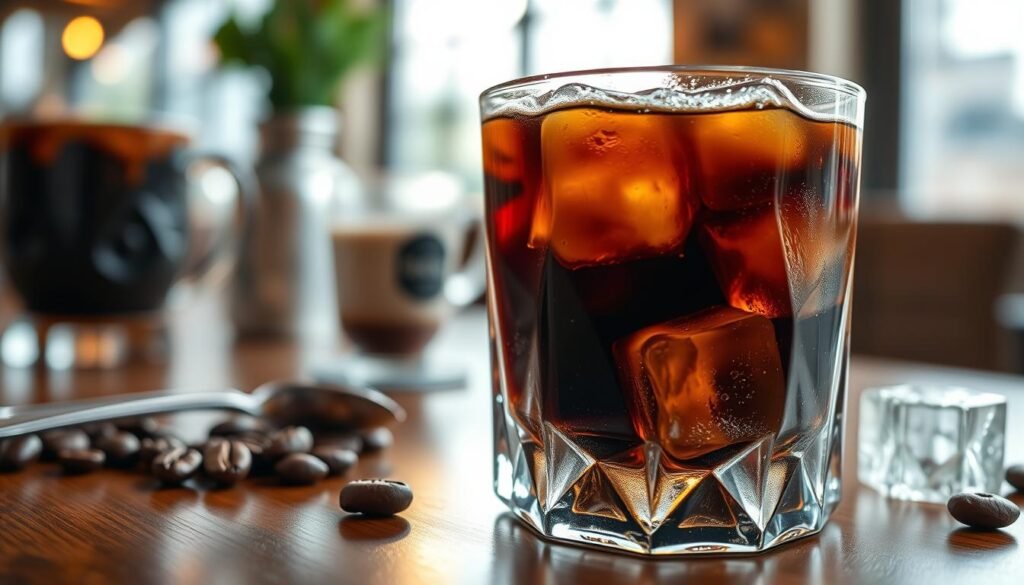
Freezing vs. coffee ice cubes for best results
Freezing can extend storage up to about three months, yet many guides warn that thawed brew tastes less vibrant. A practical compromise is to freeze small portions or make ice cubes from strong concentrate.
- Trade-offs: freezer time extends shelf life, but thawed liquid can lose flavor and body.
- Coffee ice cubes: freeze concentrate or stronger brew to chill drinks without watering them with plain water ice.
- Containers: use airtight, freezer-safe containers with minimal headspace to reduce oxidation shocks.
- Glass caution: only freeze in glass rated for freezers and leave headspace to avoid cracking; silicone trays are safer for cubes.
- Thawing: move frozen portions to the fridge to defrost gently; avoid countertop thawing to protect flavor.
- Practice: test a small batch before committing the full jug and freeze smaller servings to avoid refreezing.
- Labeling: mark brew and freeze dates so we track age in weeks and avoid surprises.
| Method | Best use | Result |
|---|---|---|
| Coffee ice cubes | Iced drinks, blended lattes | Chills without dilution; preserves sweetness |
| Freezing whole batch | Longer storage (weeks–months) | Extends shelf life but can mute aroma |
| Small frozen portions | Single servings | Limits refreeze cycles; better texture |
In short, chilling with coffee ice is usually better for flavor than freezing an entire batch. When we do freeze, we choose airtight containers, small portions, and fridge thawing to keep the cup as close to our intent as possible.
Signs your cold brew has gone bad: smell, taste, and visual cues
A quick sniff and a glance often tell us whether a batch is safe to drink. Trust simple sensory checks before pouring a cup.
We watch for four clear red flags: a sharp sour or rancid aroma, an unusually bitter or harsh taste, persistent cloudiness or murky separation, and any visible mold. If any appear, discard the batch immediately.
Sour smell, off taste, and odd appearance
A thin, natural separation can be normal and harmless. Still, fuzzy growth, white spots, or unusual clumps mean spoilage. Do not try to skim or rescue moldy containers.
Milk-added batches and room temperature risks
Once we add milk or milk alternatives, the shelf window shortens. Always finish milk-added drinks within two to three days when refrigerated.
- Room temperature exposure speeds both staling and microbial growth; follow the two-hour safety rule for servings.
- Stale taste alone may not be unsafe, but it reduces enjoyment and signals it’s time to brew fresh.
- Keep concentrate separate and dilute per cup to avoid contaminating an entire jug.
| Sign | What it means | Action |
|---|---|---|
| Sour or rancid aroma | Likely microbial spoilage | Discard immediately |
| Harsh or bitter taste | Possible spoilage or overextraction | Discard if paired with smell or appearance issues |
| Cloudiness or fuzzy spots | Microbial growth or sediment change | Discard; do not skim |
| Milk added | Dairy shortens shelf life | Use within 2–3 days; refrigerate |
We reduce risk by using airtight, cold storage and by checking aroma and taste after day seven, especially beyond day ten. A clean routine keeps our batches enjoyable and safe.
Cold brew concentrate care: storing, diluting, and mixing
We treat concentrate as the most perishable element of our system. Proper storing cold habits protect aroma and sweetness so each glass tastes as intended.
Keep concentrate and dilution separate for maximum shelf life
Store the brew concentrate airtight in glass or stainless containers. That minimizes oxygen and odor pickup and preserves clarity.
Decant into smaller bottles as levels drop to cut headspace. Label brew date and a clear use-by date to track life cold brew in the fridge.
Best ratios and when to mix with water or milk
Start with a 1:1 ratio of concentrate to water or milk per cup and adjust to taste. Mixing by the glass keeps the base batch fresher longer.
Use filtered water and clean equipment to reduce haze and off-notes that can develop over days. For iced drinks, prefer coffee ice cubes made from concentrate to avoid dilution.
- Keep concentrate sealed; dilute per serving.
- Airtight glass or stainless container preserves flavor best.
- Expect top quality at 7–10 days; acceptable through day 14 with ideal storage.
- Workflow: brew, filter, chill, store concentrate airtight, then mix by the glass.
| Item | Recommendation | Benefit |
|---|---|---|
| Container | Airtight glass or stainless | Less oxidation; better aroma retention |
| Mixing ratio | 1:1 with water or milk to start | Balanced cup; adjustable to taste |
| Storage practice | Decant to small bottles; label dates | Reduced headspace; easier rotation |
Enjoy fresher flavor longer: our expert takeaways for everyday brewing
We keep this simple: brew clean, chill fast, and store airtight in glass so freshness holds through normal use.
Keep the jug at or below 40°F (4°C). Peak flavor shows in days one to seven, and quality is usually fine up to about ten to fourteen days in the fridge.
Favor concentrate for flexibility and longer life. Mix per glass, finish milk-added drinks within two to three days, and use coffee ice cubes to chill without watering down taste.
Use fresh beans, a steady grind, filtered water, and spotless gear. Label brew dates, plan use-by dates, and taste-check after day seven. Discard at the first sign of off smell, mold, or unusual cloudiness.
Good inputs, careful storing, and right-sized batches are the fastest path to reliably better cold brew at home.