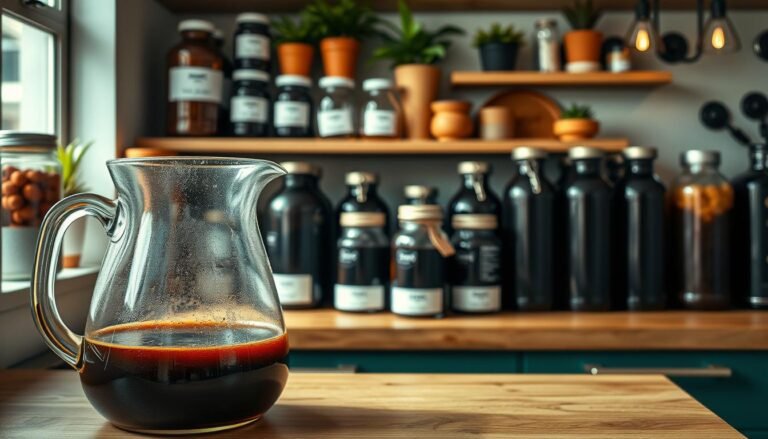
Cold Brew vs Regular Coffee
We set out to compare two popular methods so readers can choose what fits their routine. Our goal was practical: explain how long, cool steeping and hot extraction shape taste, acidity, and strength.
In simple terms, one method uses an extended cold steep that yields a concentrate to dilute, while the other starts hot and is cooled or poured over ice. Grind size, contact time, and water ratios matter for both approaches.
We found that the long steep often produces a smoother, lower-acidity cup with velvety body. The hot-extracted option tends to be brighter and lighter, and many cafés customize it with cream and sweeteners.
We also flagged caffeine and gear differences up front. Higher coffee doses and longer contact can make the cold concentrate stronger per serving, while pour-over or drip setups favor faster extraction.
What sets cold brew, iced coffee, and hot brewed coffee apart
Our team mapped the practical differences between long, cool steeps and quick hot extraction. Below we summarize how method, grind, and timing shape flavor and workflow.

Brewing method basics
One approach uses room or cold water and long contact with coarse grounds to make a concentrate. This method needs many hours and often a French press or a dedicated maker.
Another approach uses hot water through a drip or pour-over to extract quickly. The hot cup is then cooled over ice or flash-brewed directly onto ice for a bright, clean result.
Time, grind, and ratio
- Contact time: about 12–24 hours for the concentrate, minutes for drip or pour-over iced coffee.
- Grind: coarse for long steeps; medium for drip and pour-over.
- Ratio: common concentrate near 1:5 (coffee-to-water), diluted about 1:2 for serving.
| Method | Typical gear | Purpose |
|---|---|---|
| Long steep | French press, cold brew maker | Batch concentrate for the week |
| Hot extraction | Drip, pour-over | Quick iced coffee or flash-brew |
Taste, body, and acidity: how each brew style changes the cup
We tasted each method side by side to see how extraction changes what you sip.

Smoother, heavier texture versus brighter clarity
Our tastings showed that cold brew often came across smoother and sweeter with a heavy, velvety body. Many of us preferred it black because chocolate and caramel notes carried well.
By contrast, iced coffee—especially flash-brewed over ice—felt lighter and more aromatic. The cup revealed citrus, floral, or fruit notes and a lively finish.
How heat affects oils, acids, and perceived bitterness
- Hot extraction released more oils and acids, which boosted liveliness but raised the risk of bitterness when over-extracted.
- Cold extraction left many heat-dependent compounds behind, lowering perceived acidity and sharpness.
- Serving preferences differed: the smoother concentrate was often enjoyed plain, while iced preparations were commonly sweetened or creamed.
| Attribute | Cold Brew | Iced / Hot Coffee |
|---|---|---|
| Body | Heavy, velvety | Light, sparkling |
| Acidity | Lower | Higher, brighter |
| Common flavors | Chocolate, caramel, cocoa | Citrus, floral, fruity |
| Serving tip | Drink black or dilute | Try with cream or syrup |
Caffeine and strength: parsing the buzz in Cold Brew vs Regular Coffee
We measured how grind, ratio, and steeping time change caffeine in each preparation. Our goal was to show which steps make the base stronger and how to control serving strength.
Contact variables that drive extraction
Long contact and a higher coffee-to-water ratio often yield a more concentrated base. With coarse coffee grounds and many hours of steep, the cold method pulls plenty of caffeine without heat.
Dialing in strength at serving
Dilution is the simplest control. We measured concentrate, then mixed precise parts water to hit the strength we wanted.
- Long steep + high ratio = strong brew concentrate before dilution.
- Heat is not required for caffeine extraction; hot methods can match strength with dose and grind.
- Flash-brewed iced coffee preserves clarity while reaching target caffeine with a shorter contact time.
- Measure concentrate and pours to keep caffeine consistent across batches.
| Factor | Effect on caffeine | Practical tip |
|---|---|---|
| Contact time (hours) | More time increases extraction | Use 12–18 hours for a strong cold brew concentrate |
| Grind size | Coarse slows extraction; fine speeds it | Coarse for concentrate; medium for flash-brew |
| Ratio / dilution | Controls final strength | Start 1:5 concentrate, then test 1:1–1:2 dilution |
Which should we choose for our routine?
We compared batch and single-serve approaches to find the best match for busy mornings and slow weekends. Our tests weighed speed, storage, and how each method fits daily habits.

Use cases: batch-friendly concentrate, quick iced options, and hot poured over ice
For a week of ready drinks, we recommended cold brew when we wanted a single large batch that stored well in the fridge as a concentrate. That approach cut morning steps and kept flavor consistent for days.
When we wanted a quick, bright cup that highlighted origin notes, we chose iced coffee or a flash-brew pour-over over ice. Drip or pour-over gear made one-off servings fast and fresh.
- Batch: make a concentrated batch in a French press or dedicated maker and dilute for easy, repeatable servings.
- Speed: brew iced over ice or use drip to get a lively cup in minutes.
- Flavor goals: choose the smoother concentrate served black or a flexible iced drink that welcomes milk and syrups.
- Gear match: use a French press or cold maker for room-temperature steeps; set a drip or pour-over station for on-demand cups.
| Routine | Best fit | Why |
|---|---|---|
| Busy week mornings | Batch concentrate | Scales easily and stores refrigerated for days |
| Quick refresh | Flash-brew iced | Fast, bright cup that shows origin character |
| Fresh pot ready | Hot poured over ice | Good when a hot batch is already available |
Pro tips to brew better at home (and common mistakes to avoid)
Small technique tweaks let us lift flavor and remove common brew mistakes at home. We focused on steps that stop weak cups, keep concentrates fresh, and make results repeatable.
Prevent watery iced drinks
We chilled hot pots before adding ice, or we flash brewed directly over a measured ice mass so melt matched the final cup. That stopped dilution and kept flavor bright.
Grind size and roast choice
Use coarse ground for long steeps to avoid over-extraction. For iced servings, a medium grind highlights aromatic beans and keeps clarity.
Storage, freshness, and cleaning
We stored cold brew concentrate in a sealed container in the fridge and used it within ten days. When flavor faded, oils on equipment were the usual culprit — regular deep cleaning fixed that.
Ratios that work
We standardized a strong coffee-to-water concentrate, then diluted about 1:2 at serving. Measure water and grounds so each batch scales and stays consistent.
- Chill or flash-brew to prevent watery iced coffee.
- Match grind to method: coarse for long steeps, medium for on-demand iced.
- Store sealed in the fridge and clean oils from gear.
- Log recipes and tweak grind, time, and ratio for repeatable results.
| Issue | Fix | Why it works |
|---|---|---|
| Watery final cup | Chill hot brew or flash-brew over ice | Melt equals planned dilution, preserving strength |
| Flat, stale flavor | Clean oils and seal concentrate | Removes rancid oils and limits oxidation |
| Inconsistent strength | Measure ratio and log recipes | Repeatable volumes yield steady flavor |
Your next cup: picking the brew that fits your taste and time
In closing, we weigh trade-offs so you can pick the method that fits your mornings and moods.
Choose cold brew when you want a heavy-bodied, lower-acidity cup and easy caffeine control through a cold brew concentrate. Plan 12–24 hours with coarse coffee grounds, then dilute the brew concentrate to taste and store it cold for the week.
Pick iced coffee or a flash-brew pour-over when time is short. Use drip or pour-over, reduce hot water, and brew iced coffee directly over measured ice to lock flavor and avoid dilution.
Match grind, ratio, water temperature, and time to your gear and roast. Both approaches hit caffeine and flavor targets — we simply calibrate dilution and technique to make the perfect cup for the moment.