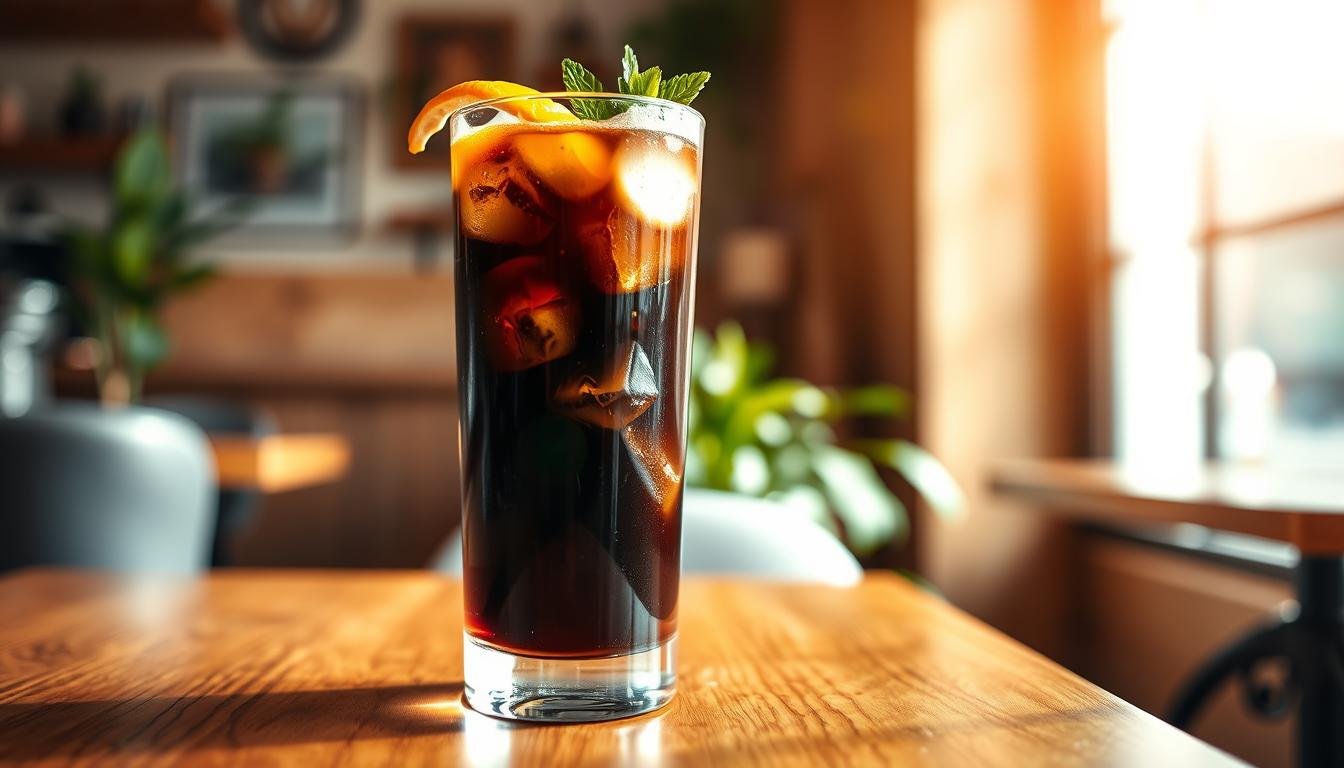
What is Cold Brew Coffee
We introduce a simple process that pairs coarsely ground beans with cold water and lets the mix steep slowly. The result is a smooth, low-bitterness drink that we can make at home with minimal gear.
This method differs from iced coffee because slow extraction leaves many harsh compounds behind. Expect a long steep time—about 12 to 14 hours—and better consistency when we brew in the fridge.
We recommend filtered water and sanitized equipment for cleaner flavor. Use any sealable vessel: a mason jar, a French press, or a purpose-built system. Ratios vary—1:8 for concentrate, 1:11 ready-to-drink, or stronger if you prefer a punchier cup.
After steeping, filter with paper for clarity or cheesecloth for more body. Dilute concentrate 2:1 or 1:1 with water or milk, serve over ice, or warm gently. Store the finished batch refrigerated for up to a week.
What is Cold Brew Coffee
We let coarsely ground beans rest in cold water for about half a day to extract a mellow, stable concentrate.
Our definition and why it matters right now
We define this cold-extraction method as steeping coarse grounds in chilled water for roughly 12–14 hours, then filtering the result. The process yields a concentrate or a ready-to-drink batch that stays true over several days.
Cold-extraction versus iced and flash brew
Compared to iced coffee that starts hot and cools, this approach avoids many bitter and sour compounds. Flash brew — hot poured over ice — is faster and brighter, but it has a different aroma and acidity.
Why the cup tastes smooth, sweet, and less bitter
Low temperature and long contact time pull desirable oils and caffeine while leaving harsh compounds behind. The outcome is a rounder flavor and lower perceived bitterness in brewed coffee.
| Method | Time | Acidity | Typical Profile |
|---|---|---|---|
| Cold-extraction | 12–14 hours | Low | Smooth, sweet, stable |
| Iced (hot then cool) | Minutes | Medium–High | Bright, sometimes bitter |
| Flash brew (hot over ice) | Minutes | High | Bright, aromatic |
We find this way forgiving, scalable, and ideal when you want coffee cold from the start. It’s a practical path to make coffee for the week without sacrificing flavor or consistency.
Gear, beans, water, and ratios: the essentials for making cold brew at home
Good results begin with gear, grind, and clean water — the three pillars we rely on.
Choose a brewer you already have: a mason jar, a french press, a Toddy system, or a Hario Mizudashi. Sanitize jars, filters, and any parts before use to protect a long, cold extraction.

Grinder and grind size
Use an adjustable burr grinder and set it around 7/10 for medium-coarse. This slightly finer-than-maximum setting helps draw more sugars and avoids sour edges.
Water and technique
Start with filtered water for a cleaner cup and fewer off-flavors. Wet all grounds thoroughly and stir to break up dry pockets so extraction stays even.
- Sanitize equipment before brewing.
- Weigh coffee in grams and record settings each time.
- Wet the grounds and stir to promote uniform extraction.
Ratios that scale
We use three reliable ratios: 1:8 for a concentrate (about 125 grams per liter), 1:11 for ready-to-drink, and 1:4.5 for a bolder batch. Note the grams, grind, and water for repeatable results.
| Style | Ratio | Example |
|---|---|---|
| Concentrate | 1:8 | 125 grams per 1 L water |
| Ready-to-drink | 1:11 | ~91 grams per 1 L water |
| Strong | 1:4.5 | ~222 grams per 1 L water |
Step-by-step: how we brew cold brew coffee for consistent results
Consistency comes from methodical prep, measured inputs, and timed attention during brewing. Below we break the process into clear steps so you can repeat a successful recipe every time.
Prep and sanitize
We wash and sanitize jars, filter baskets, and any reusable parts. Make sure everything is dry before use.
Combine grounds and water
Add medium-coarse grounds to the vessel, pour in measured water, and stir. Wet every particle to avoid dry pockets that stall extraction.

Steep time and environment
Target 12–14 hours and store the batch in the fridge. This time frame controls flavor and reduces food-safety risk.
Filter and dilute
Paper filters give clarity; cheesecloth or fiber keeps more oils for body. If you made a concentrate at 1:8, dilute 2:1 or 1:1 with water or milk to taste.
- Record ratio, grind, water, and time so you can reproduce the recipe.
- Compost used grounds, rinse, and sanitize gear for the next brew.
- Tweak only one variable at a time—grind or steep time—to refine flavor.
Serving, variations, and storage that fit your routine
A single overnight batch will serve our week if we store and serve it the right way.
We use a french press as a simple cold brewer: steep overnight, press gently, then decant to a sealed bottle to cut sediment and keep clarity.
French press and easy at-home approaches
Steep in the press for 12–14 hours at fridge temperature. Press slowly to avoid stirring fines into the liquid.
Decant immediately and label the bottle with grind and ratio so we can repeat a great cup.
Coffee ice cubes and iced service without dilution
Freeze leftover brewed liquid in trays to make coffee ice cubes. Serve over them so the drink stays strong as the cubes melt.
Hot service, strength tweaks, and storage
To make hot coffee from concentrate, dilute 1:1 with water and warm gently. Adjust strength by changing the initial ratio or the cup dilution.
- Common glass ratios: 2:1 or 1:1 concentrate to water or milk, then fine-tune by taste.
- Add a pinch of salt or a splash of milk for balance.
- Store sealed in the fridge and use within seven days for best flavor.
| Service | Prep | Use |
|---|---|---|
| Chilled | Decant + ice cubes | Ready-to-drink, no dilution |
| On ice | Pour over coffee ice cubes | No watering down |
| Hot | Dilute 1:1 then warm | Quick hot cup from concentrate |
Brew with confidence: your cold brew, every time
By recording grams, grind setting, and steep hours, we turn trial-and-error into a steady routine. Note your ratio (for example 1:8), the grams used, and the grind level—medium-coarse works well for most home setups.
Sanitize gear, wet the grounds fully, and store the jar in the fridge for the full 12–14 hours. Choose paper for clarity or cheesecloth for more body. Filter, dilute to 2:1 or 1:1, then serve over ice or warm gently.
Log each change and adjust one variable at a time. Our simple checklist—measure, grind, combine, steep, filter, dilute—keeps the recipe repeatable and enjoyable week after week.