Cold Brew vs Hot Coffee
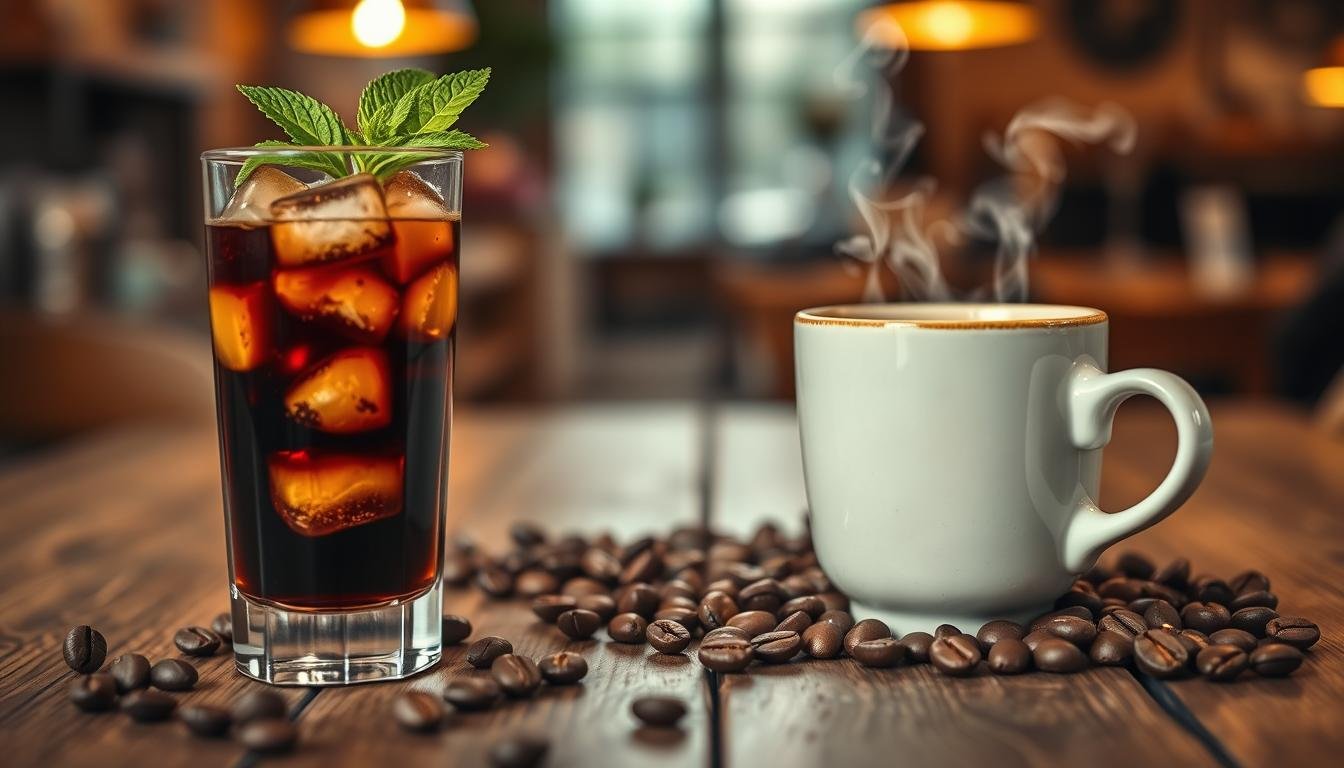
We open with a simple question: which method fits our daily cup? This piece frames Cold Brew vs Hot Coffee as a practical A or B choice. We set expectations for taste and feel so readers pick what matches the moment.
Hot coffee uses near‑boiling water to extract oils, acids, and aromatics in minutes. That yields lively acidity and balanced bitterness. Typical caffeine per 8 oz sits around 80–120 mg.
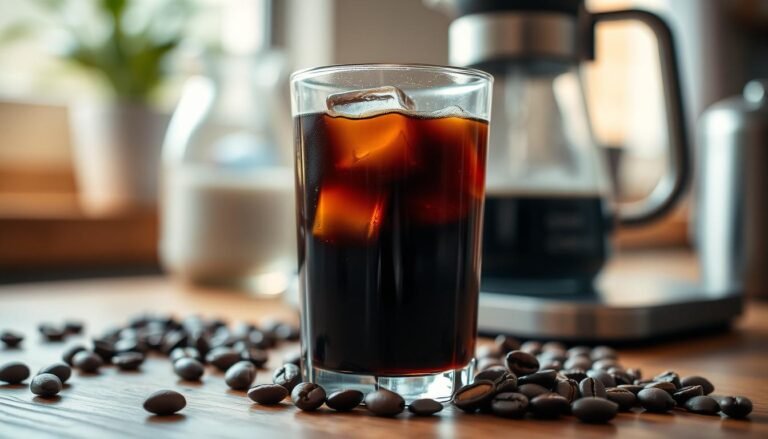
By contrast, cold brew relies on long steeps at low temperature, often as a concentrate. It cuts acidity and sharpness and gives a smoother mouthfeel. Concentrates can be high in caffeine per ounce but are diluted to serve.
We preview the practical differences we’ll explore: process, aroma, acidity, body, and caffeine effects. We also note gear like a french press or a dedicated maker can shape clarity and consistency. Read on to match method to mood, season, and routine.
Why this comparison matters right now for our daily coffee routine
Our daily cup often comes down to how much time we have and what kind of taste we want.
Fast methods take 2–5 minutes and give vivid aromatics and bright acidity. A slow extraction needs about 12 hours and trades speed for smoothness and lower perceived acidity and bitterness.
That timing affects our mornings and weekly planning. Quick preparation fits rushed starts and delivers an immediate aromatic hit. A prepared concentrate gives ready pours for several days and flexible servings on demand.
- We pick quick for a lively, wake‑up cup.
- We choose slow when we want a mellow, easy‑to‑drink profile.
- Flash‑chilled drinks preserve hot flavors—replace roughly 40% brew water with ice to offset melting.
| Metric | Fast Method | Slow Method |
|---|---|---|
| Time | 2–5 minutes | ~12 hours (overnight) |
| Taste | Bright, aromatic | Smoother, less acidic |
| Convenience | On‑demand cup | Batch prep, grab & go |
| Caffeine feel | Immediate hit | Flexible servings |
Cold Brew vs Hot Coffee: a quick side‑by‑side to frame the differences
Let’s line up the key contrasts so we know what each approach brings to our cup.
Hot brew uses near‑boiling water (about 90–96°C / 194–205°F) and takes minutes. That extracts volatile aromatics and more organic and chlorogenic acids, giving a brighter, more acidic and aromatic drink.
By contrast, cold brew uses cool water (roughly 5–20°C / 41–68°F) steeped 12–24 hours. The long, low‑temperature window pulls fewer bright acids and more oils, so the result is smoother, often less acidic, and fuller in body.

| Metric | Hot brewed coffee | Cold brew |
|---|---|---|
| Temperatures | 90–96°C (minutes) | 5–20°C (hours) |
| Flavor & aroma | Bright, aromatic | Smoother, oilier |
| Caffeine | Extracts quickly per serving | Concentrate can be higher if undiluted |
- Acidity: hot water favors bright acids; cooler extraction feels gentler.
- Serving: hot brewed coffee is usually a ready cup; cold brew is often a 2–3× concentrate to dilute.
- Practical: flash‑chilling (brewing hot over ice) preserves hot‑brew flavors for iced drinks.
Both methods make excellent brewed coffee when we control grind, ratio, time, and water. We pick hot brew for lively aromatics and quick prep, and choose cold brew for smooth, make‑ahead servings that are easier on the stomach.
Brewing methods that shape taste, acidity, and caffeine
The way we brew sets the stage for every sip’s flavor and strength. Small shifts in heat, grind, and time move a cup from bright to smooth and from mild to bold.
Cold steep basics
Cold brew basics use cold water, a coarse grind, and long steep hours—usually 12–24 hours at about 41–68°F. Many make a 2–3× concentrate to dilute later, which keeps a smooth, low‑acid profile.
Hot extraction fundamentals
Hot brew uses near‑boiling water (~194–205°F) and method‑matched grind sizes. Extraction finishes in 2–5 minutes; that pulls volatile aromatics and brighter acids for a lively cup.
Key variables to control
- Water temperature: steady heat for hot methods, steady cool for long steeps.
- Time and hours: minutes for hot extractions, many hours for cold batches.
- Ratio and grounds: coarser grounds for long contact; finer grinds for short extractions.
- Beans and roast: lighter roasts taste brighter when brewed hot; the same beans feel rounder when brewed cold.
| Variable | Cold method | Hot method |
|---|---|---|
| Typical temperature | 41–68°F | 194–205°F |
| Contact time | 12–24 hours | 2–5 minutes |
| Grind | Coarse | Medium–fine (method dependent) |
| Result | Smoother, less acidic | Brighter, more aromatic |
The chemistry of extraction: how temperature changes the cup
Temperature steers the chemical race that turns roasted beans into flavor and body. We outline how heat or cool water shifts acids, aromatics, sugars, and caffeine so we can predict and adjust our cup.
Acids and acidity
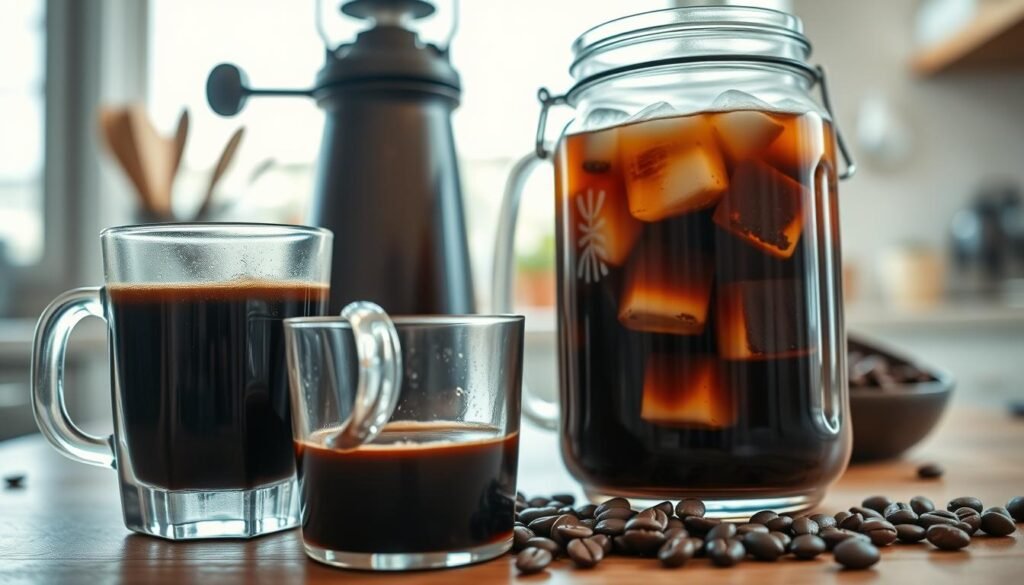
Hot brewed coffee at 90–96°C extracts more chlorogenic acids. Those break into quinic and caffeic acids, which raise perceived acidity and can add bitterness if over‑extracted.
Cooler extraction pulls fewer bright organic acids like citric and malic. The result is lower acidity and a gentler profile in cold brewed coffee.
Volatiles, oils, and sweetness
High temperature unlocks volatile aromatics—esters, pyrazines, and furans—so hot brewed coffee smells more expressive.
Lower temperatures mute those volatiles but preserve lipids. More oils mean a fuller mouthfeel and make sugars easier to taste, increasing perceived sweetness without adding sugar.
Bitterness and caffeine dynamics
Phenolic bitterness rises with over‑extraction or long contact at warm temperatures. Cold methods tend to reduce astringency and harsh phenolic notes.
Caffeine is water‑soluble. Hot water extracts it fast; long cool steeps and concentrates can match total caffeine, though dilution and serving size change the final effect.
- Adjust grind, temperature, or time one variable at a time to tune acidity and bitterness.
- Match lighter beans with hotter brewing for bright notes, or use cool steeps to highlight chocolate and nutty notes.
| Factor | Warm extraction | Cool extraction |
|---|---|---|
| Main yields | Volatiles, dyes, acids | Oils, sugars, smooth body |
| Perceived acidity | Higher | Lower |
| Caffeine timing | Fast | Slow but can be concentrated |
Flavor and mouthfeel: what we actually taste in the cup
Flavor and mouthfeel are where extraction meets experience—this is what we notice first.
Cold steep cues
We find a smooth, rounded texture with low perceived acidity. Oils and body stand forward, so sweetness feels amplified even with black servings.
The finish is gentle and lingering. A concentrate can make the caffeine feel potent, so serving size matters.
Hot brewed impressions
Near‑boiling extraction produces bright, complex aromatics and layered acidity. When done well, bitterness frames sweetness in a balanced way.
Paper‑filtered methods often produce a lighter, crisper mouthfeel that highlights floral and fruit notes.
Why the same beans taste different
- Heat unlocks volatile aromatics and bright acids.
- Cool, long contact emphasizes oils, body, and perceived sweetness.
- Service temperature changes perception: chilled cups mute volatile scent but boost texture and sugar perception.
| Profile | Key traits | Pairing |
|---|---|---|
| Smooth, sweet | Low acidity, fuller body | Chocolate, nuts |
| Bright, aromatic | Layered acidity, crisp finish | Fruits, pastries |
We suggest a side‑by‑side tasting with the same beans to learn which taste and notes we prefer. Neither approach is better—each suits a different flavor aim.
Acidity, comfort, and wellness considerations
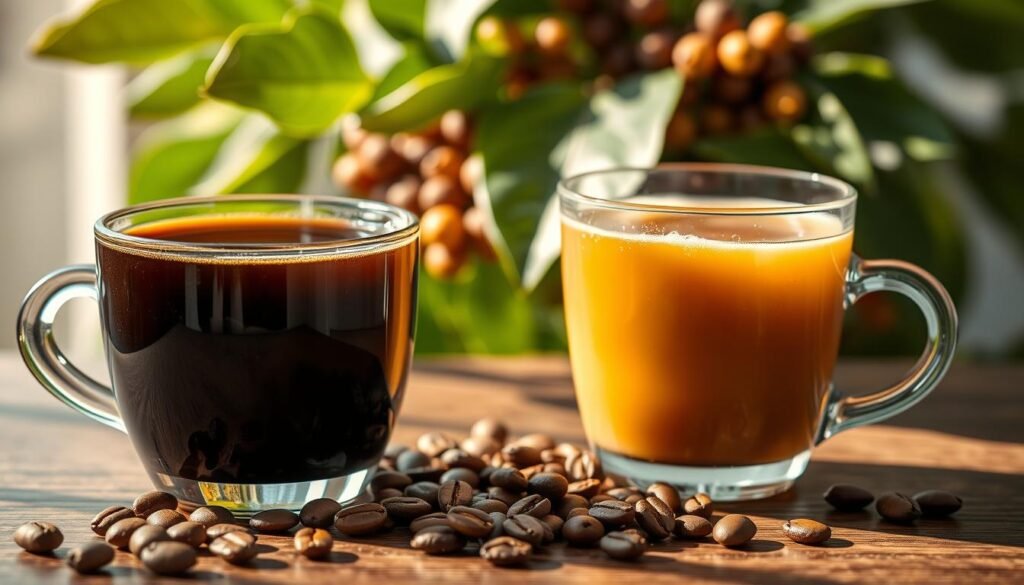
Sensitivity and comfort are key when we choose a cup. Cooler extraction often produces a less acidic profile. Reports suggest perceived acidity and bitterness drop roughly 60–66% compared to typical hot methods. That change can matter for many of us with reflux or a sensitive stomach.
Why cool extraction can feel gentler
Lower temperatures extract fewer bright organic acids and reduce CGA breakdown products. That chemical shift can translate to less perceived irritation while keeping flavor balance. Less acidic does not mean dull; oils and sugars remain and provide body and sweetness.
Practical tips for comfort and tolerance
- Start with moderate strength and adjust dilution to find the best balance of flavor and comfort.
- If hot coffee causes harshness, check grind, time, and temperature to avoid over‑extraction.
- Watch caffeine intake—it can affect wellness, so manage serving size and timing.
- Stay hydrated and pair your cup with a light snack when needed.
| Effect | Typical change | Action |
|---|---|---|
| Perceived acidity | 60–66% lower | Try weaker concentrate and increase dilution |
| Bitterness | Reduced | Adjust hot method: coarser grind, shorter time |
| Comfort | Varies by person | Record how we feel and tweak parameters |
Use cases and creativity: picking the right brew for the moment
Our use case—commute, brunch, or a party—should guide how we prepare a drink. We choose a fast, aromatic cup when we need a warm lift. We pick a make‑ahead concentrate when we want versatility and ease for the week.
Everyday hot: cozy mornings, fast prep, rich aromatics
We reach for a quick method when time is tight. A 2–5 minute hot brew delivers bright aromatics that pair well with reading or packing up for work.
This approach highlights floral and fruity flavors. It suits single‑cup routines and moments when we want immediate caffeine and scent.
Cold brew versatility: concentrate, iced drinks, and mixology
We make a concentrate (often 2–3× strength) to streamline mornings and creative mixing. A stored cold brew concentrate works for lattes, tonics, lemonades, and cocktails.
For gatherings, these recipes scale easily. Cocoa and nutty notes shine in chilled formats, and a small pour of concentrate gives a strong caffeine boost.
Flash‑chilled iced coffee: hot over ice for sweet, tangy refreshment
When we want hot‑brew flavors in a cold glass, we brew directly over ice. Cut brew water by ~40% and replace it with ice so the drink chills without dilution ruining balance.
The result keeps lively acidity and aromatic lift while serving cold and bright. It’s a great option for a tangy, sweet iced drink on short notice.
- Serving ideas: concentrate with milk for a latte, tonic for a spritz, lemonade for contrast, soda water for a coffee soda, or a martini for evenings.
- Batching tip: store concentrate in a sealed jar in the fridge to speed mornings and reduce choices.
- Process control: dial grind, water, and time first so mixed drinks start from a consistent base.
| Use case | Best method | Why |
|---|---|---|
| Quick morning | Hot brew | 2–5 minutes; bright aromatics and fast caffeine |
| Weekly convenience | Cold brew concentrate | Make‑ahead, versatile for iced drinks and cocktails |
| Iced now, hot flavor | Flash‑chilled over ice | Preserves acidity and aroma; adjust water for melt |
Gear and process tips to nail consistency at home
Nailing the same cup each time starts with a few reliable tools and a clear recipe. We focus on repeatable ratios, steady temperatures, and simple notes so each batch matches our taste.
Dialing in: ratios, steep times, and filtration choices
We keep a log of dose, water volume, and target yield so results are repeatable. For hot methods, aim for 1:15–1:17 (coffee to water) and 2–5 minutes extraction. For long steeps, use a 1:4 concentrate ratio and 12–24 hours with coarse grounds.
- Use a french press for fuller body; metal filters keep oils, paper gives clarity.
- Stir grounds gently to wet evenly and avoid dry pockets.
- Keep cold water steeping in the fridge for stable results and label jars with start time.
| Factor | Hot method | Long steep |
|---|---|---|
| Grind | Medium | Coarse |
| Time | 2–5 minutes | 12–24 hours |
| Filtration | Paper or metal | Fine mesh then paper |
Scale dose for batches, dilute concentrates to taste, and track caffeine by portion size. Periodically taste the same beans, tweak one variable, and retest. These small checks keep our brewing consistent and predictable.
How we decide: matching flavor preferences, schedule, and equipment
Our method choice comes down to three things: flavor goals, schedule, and the gear on hand.
If we want bright, aromatic complexity and an immediate cup, a quick hot brew wins. It takes about 2–5 minutes and typically delivers 80–120 mg of caffeine per 8 oz. Higher temperature pulls volatile aromatics and lively acids for a vivid taste.
When we prefer a smoother, lower‑acid profile that lasts through the week, a slow steep makes sense. A long steep of roughly 12–24 hours yields a fuller body and a concentrate that can be strong before dilution. We must plan hours ahead and control dilution for caffeine.
- Flavor: choose bright and tangy for immediate aroma; choose smooth and mellow for gentler acidity.
- Schedule: pick hot for same‑day service; pick a long steep for batch prep and grab‑and‑go servings.
- Equipment: a kettle and dripper or press suit hot methods; a jar or dedicated maker works for long steeps.
- Caffeine planning: a standard hot cup is predictable; a concentrate needs measured dilution to fit our day.
| Decision factor | Quick hot method | Long steep method |
|---|---|---|
| Time | 2–5 minutes | 12–24 hours |
| Extraction effect | More aromatics and acids | More oils, fuller body |
| Caffeine handling | Predictable per serving | High before dilution — adjust to balance |
We recommend a hybrid approach: batch a long steep for busy days and keep hot brewed servings for mornings when aroma and immediacy matter most. Tune grind, water, and temperature to find the balance that fits our routine and taste.
Ready to brew with confidence: choose your method and enjoy
Ready to make a reliable cup that fits our day? Pick the fast route for bright aromatics or the make‑ahead path for a smoother, less acidic result.
Simple cold plan: coarse grounds, cool water, 12–24 hours to yield a concentrate to dilute and serve cold or mix into drinks.
Simple hot plan: heat water to ~200°F, brew 2–5 minutes in a french press or dripper, and enjoy a balanced cup right away.
Log ratio, temperature, grind, and time. Measure pours to manage caffeine and note sweetness, aroma, and mouthfeel. Alternate methods across the week to match mood and schedule.
With steady water, temperatures, and time, we can brew better coffee—any day we choose.